



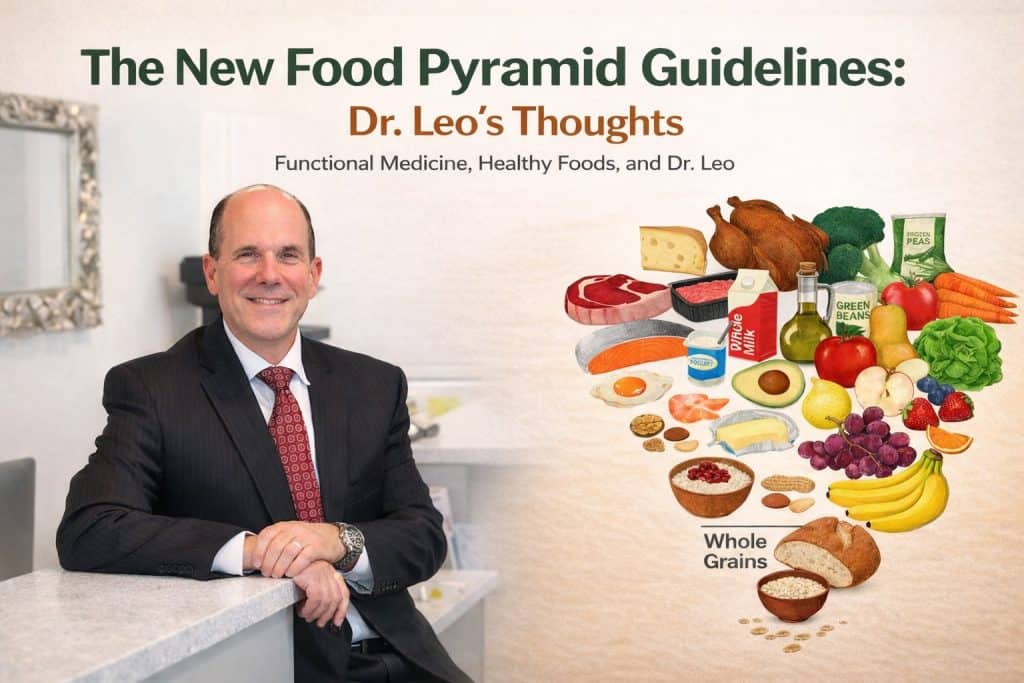
Federal nutrition policy has shifted significantly with the 2025-2030 Dietary Guidelines, affecting how Americans should approach their daily eating patterns. These updates reflect current scientific evidence about nutrition and chronic disease prevention:
• Protein recommendations have doubled: Daily intake now ranges from 1.2-1.6g per kilogram of body weight, supporting blood sugar stability and muscle maintenance as we age.
• Full-fat dairy products are now acceptable: After decades of low-fat recommendations, whole milk, full-fat yogurt, and cheese are included in the updated guidelines, reflecting research on dietary fats and health outcomes.
• Processed foods linked to health conditions: Current data shows 57% of adult calories come from ultra-processed foods, which studies connect to increased mortality rates and multiple chronic conditions.
• Nutrient density matters more than calories alone: Research demonstrates that whole, unprocessed foods support metabolic function and weight management more effectively than calorie restriction methods.
• Important factors remain unaddressed: Individual metabolic differences, meal timing, digestive health, and environmental food contaminants are not included in the current guidelines despite their documented health impacts.
• Medical education gaps exist: Most medical schools don’t require nutrition coursework, which may explain why healthcare providers aren’t always current on these dietary changes.
Successful implementation involves gradual changes—include protein with each meal, select whole foods over processed options, and consider consultation with practitioners who specialize in personalized nutrition approaches.

The food pyramid guidelines Americans have followed for decades have been restructured completely. The newly released 2025-2030 Dietary Guidelines represent a significant change in federal nutrition policy [10]. While chronic disease rates continue rising and nutrition advice often conflicts, these updated food pyramid guidelines emphasize a straightforward principle: prioritize real food most of the time [9].
The structural changes are notable. Protein now occupies the foundation position, with recommended intake of approximately 1.2 to 1.6 grams per kilogram of body weight [9]. Current food pyramid guidelines focus on nutrient-dense foods that support hormone balance, blood sugar control, and cardiovascular function [2]. Full-fat dairy products are now included after decades of low-fat recommendations [2]. These changes align with scientific evidence showing whole foods support health while highly processed foods contribute to disease development [10]. Your doctor may not have explained all the implications of these shifts for your specific health concerns.
Updated Food Pyramid Structure: Notable Changes
“American households must prioritize whole, nutrient-dense foods—protein, dairy, vegetables, fruits, healthy fats, and whole grains—and dramatically reduce highly processed foods. This is how we Make America Healthy Again.” — Robert F. Kennedy, Jr., U.S. Department of Health and Human Services Secretary, leading the reset of federal nutrition policy
Federal dietary guidance has undergone its most significant restructuring in decades. The 2025-2030 guidelines present a completely inverted pyramid design that reverses traditional nutritional priorities and changes how Americans receive official eating recommendations.
2026 Food Pyramid – Protein and Healthy Fats Take Priority
The most notable change places protein and healthy fats at the top of the inverted pyramid structure. Protein recommendations have increased from the previous 0.8g to 1.2-1.6g per kilogram of body weight daily [11]. This change represents a 50-100% increase over previous minimum intake recommendations [11].
The new guidelines advocate for healthy fats from whole food sources. These include meats, seafood, eggs, nuts, seeds, olives, and avocados [6]. Cooking recommendations have shifted as well – olive oil, butter, and beef tallow are now presented as acceptable “healthy fat” options [2]. This marks a departure from decades of low-fat dietary guidance.
Full-fat dairy products are now encouraged rather than restricted. This change reflects growing evidence that natural fats from whole foods support metabolic health rather than harm it.
2026 Food Pyramid – Vegetables and fruits hold their middle position
Vegetables and fruits secure a substantial middle tier in the updated pyramid structure [2]. The guidelines recommend consuming these foods throughout the day, particularly in their whole, unprocessed forms [2].
The updated recommendations stress variety and color diversity in produce selection [12]. Recognizing practical barriers to fresh produce access, the guidelines now explicitly accept frozen, canned, and dried options as suitable alternatives [12]. This adjustment addresses a significant gap, considering that more than 90% of Americans fall short on their produce intake goals.
This middle placement reflects the continued importance of vegetables and fruits while acknowledging the elevated priority given to protein and healthy fats in the restructured pyramid.
2026 Food Pyramid – Grains relocated to pyramid base
Whole grains occupy the narrow base of the inverted pyramid structure [11]. This placement creates confusion since it appears to minimize grain consumption. The written guidelines maintain recommendations for 2-4 daily servings of whole grains [11].
The updated text prioritizes fiber-rich whole grains while recommending “significantly reduced” consumption of refined carbohydrates such as white bread and packaged breakfast products [6]. This approach distinguishes between whole and refined grains rather than eliminating grains entirely.
2026 Food Pyramid – What disappeared from the pyramid
Several key recommendations have been quietly removed or significantly modified. The emphatic push for low-fat dairy products has disappeared entirely. Instead, the current guidelines recommend “full-fat dairy with no added sugars” [2].
The decades-long emphasis on restricting dietary fat has also vanished. The guidelines now describe this shift as “ending the war on healthy fats” [6]. This represents a complete reversal from previous federal nutrition policy that dominated American eating habits for nearly four decades.
2026 Food Pyramid – Visual Design Problems and Clinical Implications
The inverted pyramid structure creates more than aesthetic concerns—it presents practical challenges for patient understanding. The visual design places foods like steak, cheese, and whole milk in prominent positions [13], while the written text maintains limits on saturated fat intake at 10% of daily calories [11].
This creates what nutrition experts describe as “mixed signals” for patients trying to follow the guidance [11]. A patient following the visual emphasis on full-fat dairy products could easily exceed the saturated fat recommendations outlined in the accompanying text [11].
These internal contradictions within the dietary guidelines present real challenges for healthcare practitioners. When visual and written recommendations conflict, patients often default to what they see rather than what they read. The result is potential confusion about appropriate portion sizes and frequency of consumption for saturated fat-rich foods.
For clinical practice, this disconnect means healthcare providers need to spend additional time explaining the nuances between the pyramid’s visual hierarchy and its detailed nutritional specifications.
2026 Food Pyramid – Research Behind These Changes Your Doctor May Not Discuss
The structural changes to the food pyramid reflect emerging research your doctor may not have time to explain during a typical office visit. These changes are based on solid scientific evidence that challenges decades of conventional nutrition advice.
2026 Food Pyramid – Ultra-processed foods and chronic disease
Our shift toward ultra-processed foods has created significant public health challenges. Research shows that diets high in ultra-processed foods are linked to more than 30 health conditions, according to a review published in The BMJ [7]. Increased consumption of these foods is associated with a 31% higher mortality rate [7].
The numbers are concerning. Currently, 57% of daily caloric intake for American adults comes from ultra-processed foods, while for children, this number jumps to 67% [7]. These products have become increasingly available across countries at all economic development levels [8].
Ultra-processed foods create what scientists describe as conditions perfect for weight gain and disease. They are engineered for appeal, calorie-dense, low in fiber, and often contain unhealthy fats and preservatives [7]. Evidence suggests these properties may trigger chronic inflammatory diseases through gut microbiome changes [8].
2026 Food Pyramid – Low-fat dietary advice outcomes
For approximately 40 years, Americans followed low-fat diets—guidance that proved problematic [4]. Rather than improving health outcomes, this advice coincided with rising rates of obesity and diabetes [4].
When people reduced fat intake, they typically replaced it with refined carbohydrates. Research now shows that replacing saturated fat with refined carbs reduces LDL cholesterol but increases triglycerides and reduces beneficial HDL cholesterol [6]. The liver converts excess dietary starch and sugar into fat—often saturated fat [6].
Studies have found that high-fat diets produce greater weight loss than low-fat alternatives [4]. The 2015 Dietary Guidelines lifted limits on dietary fat, though as nutrition expert David Ludwig noted, “you’d never know it, because a full accounting of this failed experiment has not been made” [4].
2026 Food Pyramid – Food quality versus calorie restriction
While calories matter for weight management, research shows that food quality is equally important for preventing weight gain and promoting weight loss [9]. Not all calories affect the body in the same way.
High-quality foods—unrefined, minimally processed vegetables, fruits, whole grains, and healthy proteins—help regulate metabolism, support immune function, and reduce chronic disease risk [10]. Low-quality calories from processed foods, even in controlled portions, can negatively impact metabolic health and promote inflammation [10].
A 20-year study of over 120,000 healthy adults found that weight gain was most strongly associated with consumption of potato chips, potatoes, sugar-sweetened beverages, and processed meats. Weight loss was associated with vegetables, whole grains, fruits, nuts, and yogurt [9].
2026 Food Pyramid – Protein for blood sugar stability and healthy aging
The new guidelines emphasize protein for specific reasons. Protein consumption helps regulate blood glucose levels—pairing carbohydrates with protein can reduce glucose spikes that lead to energy crashes and hunger [2]. Eating protein at breakfast can help maintain steady glucose levels throughout the day [2].
Protein offers additional benefits for healthy aging. It helps maintain muscle mass—particularly important since diabetes increases the risk of muscle loss with age [11]. It also assists with wound healing, crucial as people with diabetes face increased risk of slow-healing wounds [11].
Protein has the highest thermic effect of all macronutrients, meaning about 30% of protein calories are burned during digestion, providing a metabolic boost [2]. This explains why the new pyramid guidelines recommend approximately twice the previous protein intake for optimal health [2].
2026 Food Pyramid – Critical Gaps in the Updated Guidelines
“However, there appear to be several contradictions within the DGAs and between the DGAs and the new pyramid. The mixed messages surrounding saturated-fat-rich foods such as red meat, butter, and beef tallow may lead to confusion and potentially higher intake of saturated fat and increased LDL cholesterol and cardiovascular risk.” — Frank Hu, Professor of nutrition and epidemiology, chair of the Department of Nutrition at Harvard T.H. Chan School of Public Health
The revised pyramid structure addresses many longstanding nutritional misconceptions, yet several essential health factors remain absent from federal recommendations. These overlooked elements often determine whether patients achieve modest improvements or experience significant health outcomes.
Individual Nutritional Requirements
Current guidelines continue promoting universal dietary advice despite extensive research showing nutritional needs vary dramatically between individuals. Genetic factors, metabolic rate, and ancestral background all influence nutrient processing [12]. Two patients consuming identical meals can exhibit completely different blood glucose responses [13]. This variation explains why standardized recommendations frequently fail—optimal nutrition for one person may prove ineffective for another [14]. Genetic polymorphisms affect nutrient utilization, particularly evident in caffeine metabolism where processing speed varies significantly between individuals [14].
Food Quality Standards Beyond Labels
Federal guidelines overlook important quality distinctions in food production and sourcing. Rigid government labeling standards often discourage agricultural innovation [15]. Without consistent national standards, manufacturers create their own definitions, leading to consumer confusion through misleading labels [15]. Even USDA Organic certification gets confused with terms like “natural,” which carry minimal standards and reduced production requirements [15].
Meal Timing and Circadian Eating Patterns
Guidelines focus solely on food composition while ignoring when meals are consumed. Research demonstrates that meal timing affects weight management independent of caloric intake [16]. Eating dinner between 6-7 pm rather than 10 pm increases resting metabolic rate [17]. Consistent meal scheduling synchronizes eating patterns with circadian rhythms, supporting both metabolic function and hormonal balance [18].
Gut Microbiome Health Considerations
Federal recommendations underestimate the gut microbiome’s influence on overall wellness. This complex ecosystem houses over thirty trillion microorganisms that communicate directly with immune system functions [19]. Gut bacteria significantly affect how nutrients impact health by converting dietary fibers into beneficial short-chain fatty acids [20]. These compounds support muscle function and may reduce cancer risk while preventing digestive disorders [20].
Environmental Contaminants in Food Supply
Current guidelines barely acknowledge chemical pollutants affecting food safety. Heavy metals, PCBs, and pesticide residues enter food through contaminated soil, water, and air [21]. These contaminants pose documented health risks, with particularly concerning effects on children’s neurological development [21].
Social and Cultural Eating Dimensions
Perhaps most significantly, guidelines ignore social and cultural aspects of nutrition. Food choices result from complex interactions including cultural traditions, social relationships, and community practices [22]. Simply sharing meals with one other person increases food consumption by 44% [23]. Federal recommendations fail to recognize that communal dining builds relationships and supports wellbeing, as observed in longevity-focused Blue Zone populations [5].
2026 Food Pyramid – Medical Guidelines and Research: Understanding the Disconnect
The gap between current nutrition research and medical practice helps explain why your doctor may not fully understand these new food pyramid guidelines. Several systemic healthcare issues contribute to this disconnect.
Industry influence on dietary recommendations
Financial relationships affect dietary guidance formation. Research reveals that several committee members establishing the scientific foundation for dietary guidelines maintained financial connections to beef and dairy industries [24]. Nine of the 20 experts serving on the 2025 Dietary Guidelines Advisory Committee held financial relationships with food, beverage, pharmaceutical, or weight loss industries [25]. The food industry contributed $6 million to congressional members overseeing food regulation during 2013-2014 [26].
Population-level guidance versus individual needs
Dietary recommendations typically fail to address individual variations in nutritional needs. Studies demonstrate that even when research recognizes diversity, guidelines often cannot establish that “if you eat x, then y is a probable result” for all Americans [27]. One-size-fits-all food pyramid guidelines present challenges for various ethnic groups with distinct nutritional requirements.
Medical education gaps
Currently, 75% of U.S. medical schools lack required clinical nutrition classes [28]. Only 14% of residency programs mandate nutrition curriculum [28]. Due to insufficient training, 86% of physicians report feeling unqualified to provide nutritional advice [29].
Research to practice delays
Substantial time gaps exist between research discoveries and guideline implementation. When government agencies reject their own expert committee recommendations, evidence-based public health often yields to industry influence [26]. This explains why current food pyramid guidelines may still overlook important nutrition insights.
2026 Food Pyramid – Practical Steps to Implement These Changes
Putting the new food pyramid guidelines into practice requires realistic strategies that fit your daily routine. Here’s how to make these changes work for sustainable health improvements.
Include protein at each meal
Spreading protein intake throughout the day proves more effective than loading up at dinner [3]. Target 15-30 grams of protein per meal—amounts over 40 grams provide no extra benefits [3]. Include 1-2 palm-sized portions of protein-dense foods at every meal, breakfast included [30].
Embrace healthy fats from whole foods
Focus on fats from natural sources: meats, seafood, eggs, nuts, seeds, and avocados. Cook with olive oil for essential fatty acids [31]. Keep saturated fats under 10% of daily calories [32].
Food quality matters more than calorie counting
Research shows people who cut added sugars and processed foods while eating plenty of vegetables and whole foods lose weight without tracking calories or restricting portions [9]. Food quality drives metabolic health more than simple calorie math [33].
Pay attention to your body’s cues
Tune into natural hunger and fullness signals. Take deep breaths before meals to center yourself [34]. Notice how different foods affect your energy and mood. Stop eating when about 75% satisfied [35].
2026 Food Pyramid – Phase out processed foods slowly
Gradual changes stick better than dramatic overhauls [36]. Start with these swaps:
- Keep nutritious snacks readily available
- Choose whole grains over refined versions
- Replace sugary drinks with water
- Batch cook meals for busy periods
2026 Food Pyramid – Consider functional nutrition support
Functional nutrition practitioners create personalized plans based on your unique needs, lifestyle, and health goals [1]. A functional nutrition practitioner examines your complete picture—diet, environment, genetics—to develop individualized eating strategies [1]. They often work alongside physicians for coordinated care [1].
2026 Food Pyramid – Conclusion
The dramatic shift in the food pyramid guidelines represents more than just a visual rearrangement—it signals a long-overdue recognition that whole, nutrient-dense foods support health while processed foods fuel disease. Finally, federal nutrition policy acknowledges what many health practitioners have understood for years: protein and healthy fats deserve prominence, while refined carbohydrates should take a backseat.
These changes, however, still don’t tell the complete story. Notably absent from the guidelines are considerations for bioindividuality, meal timing, gut microbiome health, and environmental toxins—factors that significantly impact how food affects your body. Additionally, the guidelines fail to address the social dimensions of eating that contribute to overall wellbeing.
Medical professionals often struggle to keep pace with emerging nutritional science because of outdated training, industry influence, and the gap between research and practice. Therefore, you might need to look beyond your doctor’s advice when applying these new recommendations.
Practically speaking, start implementing these guidelines by including protein at every meal, choosing healthy fats without fear, prioritizing food quality over calorie counting, and listening to your body’s signals. Reduce processed foods gradually for sustainable results. Working with practitioners who understand functional nutrition can help you develop an individualized approach that honors your unique needs.
The new food pyramid marks progress toward aligning dietary recommendations with current science. Though imperfect, it offers a far better roadmap than previous iterations. Your best strategy remains focusing on whole foods most of the time while adapting recommendations to fit your personal health journey. After all, the most effective diet isn’t necessarily the one prescribed in guidelines—it’s the one you can maintain consistently for lifelong health.
2026 Food Pyramid – FAQs
Q1. What are the key changes in the new food pyramid guidelines? The new guidelines prioritize protein and healthy fats at the top, place vegetables and fruits in the middle, and relegate grains to the bottom. They also emphasize whole, nutrient-dense foods and allow for full-fat dairy consumption.
Q2. Why do the new guidelines recommend more protein? Higher protein intake helps regulate blood sugar levels, maintains muscle mass, assists with wound healing, and provides a metabolic boost. The new guidelines recommend approximately 1.2-1.6g of protein per kilogram of body weight daily.
Q3. How can I apply the new food pyramid guidelines in my daily life? Start by including protein at every meal, choosing healthy fats without fear, prioritizing food quality over calorie counting, and gradually reducing processed foods. Listen to your body’s hunger and fullness cues, and consider working with a functional nutrition practitioner for personalized advice.
Q4. What important factors are missing from the new food pyramid guidelines? The guidelines don’t address bioindividuality, meal timing, gut microbiome health, environmental toxins in food, and the social aspects of eating. These factors can significantly impact how food affects your body and overall health.
Q5. Why might my doctor not fully explain these new guidelines? Many doctors receive limited nutrition training in medical school, and there’s often a gap between current research and medical guidelines. Additionally, industry influence and the challenge of creating population-level advice can impact the information doctors provide about nutrition.
2026 Food Pyramid – References
[1] – https://thrivecarolinas.com/the-new-food-pyramid-the-mediterranean-diet-a-return-to-real-food/
[2] – https://functionalmedicinecoaching.org/blog/food-pyramid-health-coaching/
[3] – https://www.linkedin.com/posts/funmedins_the-updated-food-pyramid-2025-2030-activity-7425553938042646528-8E7u
[4] – https://www.rootedinfunctionalwellness.com/post/understanding-the-new-food-pyramid-what-it-means-for-your-health
[5] – https://theconversation.com/americas-new-food-pyramid-whats-changed-and-why-273315
[6] – https://nutritionsource.hsph.harvard.edu/2026/01/09/dietary-guidelines-for-americans-2025-2030/
[7] – https://www.hhs.gov/press-room/fact-sheet-historic-reset-federal-nutrition-policy.html
[8] – https://www.astho.org/communications/blog/2026/2025-2030-dietary-guidelines-understanding-the-new-pyramid/
[9] – https://www.usda.gov/about-usda/news/press-releases/2026/01/07/kennedy-rollins-unveil-historic-reset-us-nutrition-policy-put-real-food-back-center-health
[10] – https://www.foodandwine.com/what-dietitians-think-of-new-food-pyramid-11889708
[11] – https://news.virginia.edu/content/qa-whats-cooking-new-food-pyramid
[12] – https://www.ama-assn.org/public-health/prevention-wellness/what-doctors-wish-patients-knew-about-ultraprocessed-foods
[13] – https://www.bmj.com/content/384/bmj-2023-077310
[14] – https://hsph.harvard.edu/news/low-fat-diets-failed-experiment/
[15] – https://www.nutritionletter.tufts.edu/healthy-eating/why-the-low-fat-diet-failed/
[16] – https://nutritionsource.hsph.harvard.edu/healthy-weight/best-diet-quality-counts/
[17] – https://www.wtwdenver.com/blog-4-1/calorie-quality-vs-quantity-what-matters-more-for-health
[18] – https://www.abbott.com/en-us/corpnewsroom/nutrition-health-and-wellness/what-does-protein-do-and-what-are-its-health-benefits
[19] – https://diabetesfoodhub.org/blog/lets-talk-about-protein-people-diabetes
[20] – https://www.afpafitness.com/blog/bio-individuality-in-nutrition-an-introduction/
[21] – https://www.humnutrition.com/blog/bio-individuality/?srsltid=AfmBOorK_G0vZi4Wuma-cYFZeLA4xN5P-nHwfYBCxnSAWcGV_1qf2hPn
[22] – https://spencerinstitute.com/how-bio-individuality-changes-the-way-we-coach-nutrition/
[23] – https://ers.usda.gov/sites/default/files/_laserfiche/publications/85687/err239_summary.pdf
[24] – https://www.hopkinsmedicine.org/health/wellness-and-prevention/does-the-time-of-day-you-eat-matter
[25] – https://wellbeing.jhu.edu/blog/2022/12/09/timing-is-everything-why-eating-on-a-regular-schedule-supports-overall-well-being/
[26] – https://chear.ucsd.edu/blog/meal-timing-every-3-4-hours-energy-focus-mood
[27] – https://www.abbott.com/en-us/corpnewsroom/nutrition-health-and-wellness/the-sixth-vital-organ-your-gut-microbiome
[28] – https://nutritionsource.hsph.harvard.edu/microbiome/
[29] – https://www.fda.gov/food/chemical-contaminants-pesticides/environmental-contaminants-food
[30] – https://www.sciencedirect.com/science/article/pii/S0033062025000209
[31] – https://pubmed.ncbi.nlm.nih.gov/9155493/
[32] – https://www.myfruitfulbody.com/blog/cultural-social-aspects-of-eating
[33] – https://www.statnews.com/2026/01/07/new-dietary-guidelines-review-panel-financial-ties-beef-dairy-industry/
[34] – https://www.nytimes.com/2023/10/04/well/eat/dietary-guidelines-food-industry.html
[35] – https://jamanetwork.com/channels/health-forum/fullarticle/2760066
[36] – https://med.stanford.edu/news/insights/2024/12/dietary-guidelines-nutrition-what-americans-should-eat.html
[37] – https://www.hhs.gov/press-room/hhs-education-nutrition-medical-training-reforms.html
[38] – https://pmc.ncbi.nlm.nih.gov/articles/PMC10745340/
[39] – https://www.mayoclinichealthsystem.org/hometown-health/speaking-of-health/are-you-getting-too-much-protein
[40] – https://www.precisionhydration.com/performance-advice/nutrition/why-you-should-eat-some-quality-protein-in-every-meal/?srsltid=AfmBOoqxwqbYr94ubHyeF5FmS5vQTqWHTOm_2-bpRYRmpYyW44OLdlyX
[41] – https://www.mayoclinic.org/healthy-lifestyle/nutrition-and-healthy-eating/in-depth/fat/art-20045550
[42] – https://newsnetwork.mayoclinic.org/discussion/mayo-clinic-radio-quality-versus-quantity-when-it-comes-to-calories/
[43] – https://greatergood.berkeley.edu/article/item/how_to_eat_mindfully_by_listening_to_your_body
[44] – https://www.cleaneatingmag.com/clean-diet/how-to-hear-your-hunger-and-fullness-signals-loud-and-clear/
[45] – https://www.healthline.com/nutrition/how-to-eat-less-processed-food
[46] – https://www.henryford.com/Services/Center-for-Integrative-Medicine/Functional-Nutrition